Showing posts with label Sustainability. Show all posts

Monday, June 29, 2015

Shearing Day


Valley View Ranch on the Lower North Fork Mattole River, in Petrolia

Just before our vacation, I was called for shearing day at the Sweet family's Valley View Ranch. It takes a lot of hands to complete all the work needed to complete the annual clip. The sheep are sorted and gathered before the crew and shearers show up. 

Ewes gathered and ready to be sheared.


Brian shearing one of the 120 he sheared that day.

Brian, from Ireland, arrived without his shearing partner, who had had a livestock emergency and had to return home. Once he got started, we had plenty of people to keep up with the skirting, which is the cleaning off of the really funky and gross wool on the edges of the fleece: poop, brambles, insects, seeds, leg hair, and sometimes, even pieces of barbed wire. Shearing day this year was hot and dry, but it's fun work, full of a lot of teasing and camaraderie, as we wade through piles and piles of wool.

After skirting, the fleeces are bundled up in a baler that stuffs them into a bag for transportation to the wool pools, where they will be sorted and sold.

Brian single-handedly sheared 120 sheep that first day. Hats off to Brian!

Before the fleeces go to the market pile, if, as I'm skirting I find one I like the feel of, I pull it aside. I select fleeces that appear in good condition that also feel soft. It's a very qualitative process. Some of them feel coarse and dry, while some feel buttery and light, and these are the fleeces I want to turn into yarn. Next week, I'll begin working on the more detailed skirting, to prepare for sending the fiber to the mill.


Skirting fleeces in the shade.


Ewes finished being sheared. They always seem traumatized, but once they get let out, they frolic and jump,
and are so happy to be done and, I think, relieved to be free of their winter coats.

Sunday, February 22, 2015

Stinging Nettle Pesto

Tonight's dinner: Cabbage noodles with stinging nettle pesto, miner's lettuce salad with lemon-mustard viniagrette, and grilled grass-fed local beef with lime garlic rub...mmmmm.

About a year and a half ago, I embarked on a new food journey. I wasn't happy with my health or weight, and someone recommended the blog of Maria Emmerich, called Keto Adapted. I did some reading, and was very intrigued with her perspective, and the results her clients claimed. So I dove in, headlong.

The basic idea is to eat a high fat, moderate protein, and low-carb diet, and this is supposed to put your body in nutritional ketosis, a state where your body burns fat for energy instead of carbs. Maria's blog is full of delicious and delightful dishes, as well as keto-adapted takes on standards, such as stroganoff, or granola. It has totally changed the way I eat, and in general, I feel a lot better than I did when I began, and I lost about 15 pounds to boot. I've since then also explored the Paleo philosophy, and found a lot of really interesting reading about how humans are meant to eat and live.

Recently, my daughter Ella has become fascinated with natural history and indigenous living traditions. She is curious about edible plants and mushrooms, and interested in how to build her own bow, wants to hunt animals with snares, make fire with a hand drill, and build debris huts and live in the woods with only a knife and a pot. Drew and I are so thrilled with this development, because we are both very interested in the same skills, and have each, on our own terms, spent time in our lives studying the natural world.

Last year, Drew carved a trail through our unique and unusual swamp, that lies down the hill from the yurt. Before then, this area was impenetrable. Now, there's a quite pleasant little walk one can take, even with the kids. Yesterday, Drew and Ella did some woods clean up on part of this walk, and created the beginnings of a little wilderness camp, where Ella is planning to carry out her survivalist experience. Today, she wanted to go back down there to work on fire drills, and also harvest wild edibles. I'm always into that idea.

We collected cattails tubers and stems from the marsh (Typha latifolia), though I'm actually quite inexperienced in how to make use of this plant. We then collected a large bunch of stinging nettles (Urtica dioica), and some miner's lettuce (Claytonia perfoliata) to use in our dinner. I also collected some chickweed (Stellaria media) because I wanted Ella to know the plant. While we were doing our walkabout, we managed to sneak up on some deer, who didn't notice us for a while, until our little dog dashed across the meadow!

Once home, I steamed the nettles to prepare my nettle pesto, and cleaned the miner's lettuce and added some sliced avocado for a salad. I cooked up some home-grown cabbage "noodles" for my low carb noodle portion (Drew and the kids had regular noodles), made some dressing, and we grilled some grass-fed T-bone steak that was grown across the creek on our neighbor's land. Now that's "paleo".

Stinging Nettle Pesto Recipe
~ 4 cups, loosely packed, nettle leaves, steamed
2 cloves garlic
2 cups walnuts
generous salt
olive oil

Mill the walnuts, garlic, and salt in the food processor until the walnuts form almost a paste. Add the steamed nettles, and pulse until well mixed. Add olive oil to create your desired pesto consistency. Add to the pasta of your choice and enjoy.

Sunday, September 26, 2010

All Mattole Foods Potluck 2010

Winner for Best Vegetable Dish: Lindsay's Carrot, Onion, Potato Cakes with Sliced Tomatoes and Yogurt Cheese

My Summer Veggie Quiche


Winner for Best Beverage: Ian's Yellow Jacket Apple and Cherry Juice


Winner for Best Dessert: Jim and Kristen's Lemon Blueberry Ice Cream

Winner for Best Meat Dish: Duck Dumpling Stew by Todd and Jessica


Winner for Best Overall: Ryan's Pumpkin Stew with Yogurt Chive Sauce


Each year the Mattole Self-Sufficiency Project puts on an all Mattole food potluck. Anyone can enter a dish, but all the ingredients of the dish must be raised in the Mattole watershed.

For this year's entry, I made a Garden Veggie Quiche. I grew some wheat two years ago, and ground the flour with our hand-powered mill. I made butter and ricotta cheese with milk I got from our friends' milk cow. I mixed up that butter and flour with a little milk and rolled out a crust, and then filled it with an onion, garlic, basil, egg, ricotta, corn, zucchini, and pepper filling. It was delicious.

The potluck featured a lot of lovely dishes, many of which were more complex this year due to the addition and availability of cow dairy. There were soups, stews, salads, veggie dishes, dried fruit, fruit leather, ice cream, grasshoppers, juice, alcohol, applesauce, and more.

The dishes were judged on a combination of flavor, complexity, difficulty of procuring the ingredients, and it seems there was a bonus for using other people's ingredients, as this represents community food sustainability. The winners were:
  • Best Veggie Dish: Lindsay's Carrot-Potato-Onion pancakes, served with sliced tomatoes and yogurt cheese
  • Best Meat Dish: Todd and Jessica's Duck Dumpling Stew
  • Best Dessert: Kristen and Jim's Blueberry Ice Cream
  • Best Side Dish: Mimi and Harold's Dried Fruit Collection. The presentation of this particular dish was stunning.
  • Best Overall: Ryan's Pumpkin Stew, served with yogurt chive sauce
All admission prices were paid in Petols, our local currency, which is based on the value of silver, and prizes were awarded in Petols.

I think that the next kind of food category to conquer is vegetable oil, such as sunflower, rape, olive, etc. That's mostly what's missing!

Thursday, June 24, 2010


Windowsills of 2x12 recycled redwood


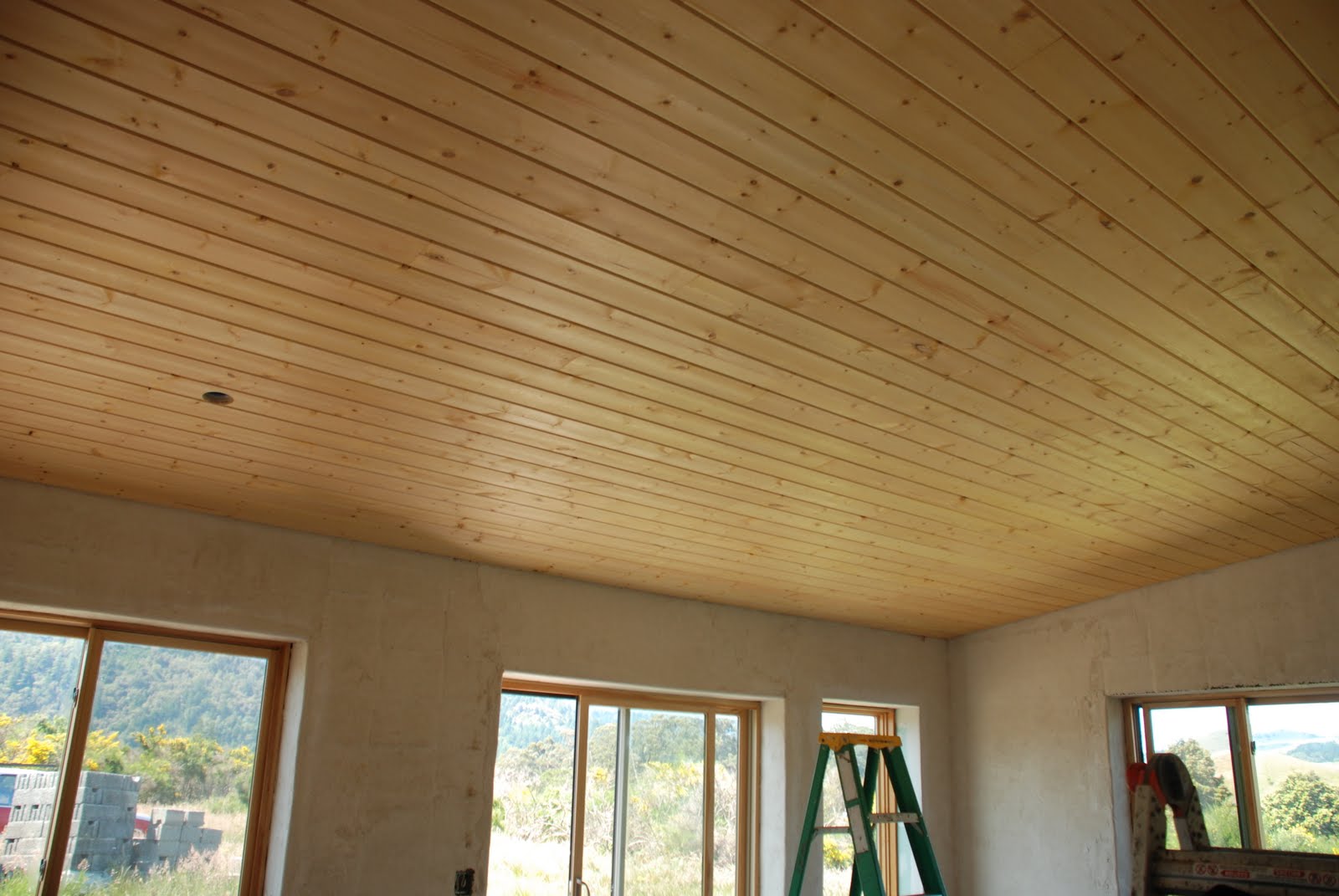
Ceiling wood finished, love it. Stained Fir/Pine/Spruce


We're getting somewhere. Slowly. These things, as we've discovered, take time. Lots of it. I've lately taken to quoting Sarah McLachlan, with her album title, "Fumbling Toward Ecstacy". Yeah. So we've finished the ceiling in our future bedroom. And we've finished three of four windowsills. Sexy oiled redwood next to oiled pine. I love how it looks. And now we're ready for plaster on several walls, and all the materials are on hand, and Ella is a day camp all week. So I'm hoping to have more photos to post soon, showing our plaster progress, too.

We stained the ceiling wood with an EcoProcote product called TimberSoy, a totally no-VOC wood stain. It's pretty nice to work with stain materials that you don't need gloves, good ventilation, or skin protection to install, and then can clean up with soap and water. Go eco-groovy.

Also, here's a shot of our wall plaster in it's packaging: cloth bags. Love it. Can't argue with that. Compostable. Or reuseable.

Sunday, October 4, 2009

Finishing the Wheat: A Backlog Post

This post has been on my backlog list for some time now. For convenience, I am linking to previous wheat entries: Walls and Wheat, and Eat Your Wheaties.

Way, way back in July, I harvested my long-awaited crop of hard red winter wheat, which was growing in two long beds inside the garden fence all throughout the winter. It took a long time to ripen, since we had a lot of cool, foggy weather in the late spring/early summer. But at last, I harvested it, and dried the bundles in the mudroom and in the open sun.

Now, this process is one of those lost homesteading arts that everyone in the old days knew how to do, but since no one grows wheat anymore, there isn't anyone around who can tell me what to do. I do have the luck of having a written source that describes how to "flail" the wheat, which basically involves beating it with a stick to get the grains loose from the dry seed heads. The ideal flail is a broom handle with a shorter stick attached to the end with a leather "thong", as the literature puts it, so that it can swing freely. You know, you get a little momentum going and it really whacks the stuff.

But since I haven't grown wheat before, nor has anyone I know, I don't have a flail. So I found a stout piece of redwood, left over from another project, with which to beat my wheat. I assumed it wouldn't be so hard, since the grain was pretty dry, but it actually took quite a bit of beating, and thorough beating at that, to get the maximum wheat grain out. Thoroughness normally wouldn't matter, but since I had such a small harvest, every last grain was VERY important to me!


Once the grain was flailed, I then winnowed the chaff from the grain, which involves a very high tech process of slowly pouring the grain between two containers outdoors where there is the right amount of wind. Pour too quickly, and none of the chaff blows away. Pour too slowly, or when the wind is gusting a little, and the hard earned wheat berries dive into the grass, never to be seen until next winter.


Wheat Berries with Chaff, ready for Winnowing

All told, my dear wheat harvest readers, I collected eight precious cups of wheat berries. Not even enough to make one batch of bread. Nor enough to sow the same amount I planted last year. Certainly, I made some gardening mistakes, which I will remedy this year. But still a bit disappointing. I'm aiming for a better turnout next year. Partly, this involves planting the wheat in the area where the chicken run was, hoping that the chicken poop will feed the wheat, will feed the people, will feed the bucket, will feed the fruit trees, will feed the chickens, will feed the wheat, and so on.

I've got some more work to do to finish closing those loops....

Saturday, September 5, 2009

The Downside of Animal Husbandry


When we brought home our chicks last April, we knew some of them would be roosters, but that only one could stay. Too many testosterone-touting red-combed dude chickens are bad news for the ladies of the house. They argue, and take out their frustrations at not being top dog on the hens, trying to prove who's who. And they all crow, which some feel to be a rather endearing and acceptable trait. But when you live 100 feet away in a tent, and one of them wakes up because the moon is full at 2 AM, let alone when ALL of them wake up at the crack of dawn like they're supposed to, the matter takes on a little extra urgency.

So at last, today, our three "extra" roosters met their maker. Neither of us thought it was a good idea to let Ella witness the actual slaughter (though we could have an interesting discussion another day about whether or not this is so), so I took her out visiting, while Drew stayed home to operate the guillotine. Which brings me to the "downside" of animal husbandry. The remaining chickens are terrified of us.

Many people try to intimate that "lower" beings have no feelings, don't think any advanced thoughts, or grieve, etc. There are many variations on this theme. But the mood in the chicken pen this afternoon is decidedly morbid, as though they are mourning for their lost comrades, even though they were a pain in the rear. When I went out with a bucket of kitchen scraps, they all took cover under their trailer. Ordinarily, the moment they see the silver bowl from a long ways off, they come running to the door, eager to see what goodies I have brought. Not today.

The problem, for me, is my ability to empathize with their grief and discomfort. If someone came and mysteriously removed several members of my family, I probably wouldn't feel comfortable either. I might not have an appetite. And yet, we need to eat. I have dabbled in vegetarianism, for many years, and find that my body cannot adequately do what it needs to do without meat. I have been buying chicken from the store, but I would rather grow it here, on our own land, and treat it right until the moment of its death, than buy the meat from a bird that never saw the open sky, even if it was allowed to "free range" shoulder to shoulder with thousands of other chickens in a barn. The obvious choice is to raise the chickens with integrity and love, and offer them an honorable passing.

I've roasted one of the three for our dinner this evening. For me, it always causes a more measured pace and style of eating, to eat what you have known when it was alive. We will surely honor tonight's rooster, in the many ways it has enriched our life, and the ways in which it will allow us to continue to enrich our own lives. I give thanks for the multiple ways in which the land continues to feed us.

Incidentally, as the photos show, when Ella and I returned home, Drew had finished plucking the chickens, but had not yet gutted and cleaned them. I set to work immediately removing pin feathers, while Drew did the butchering. Ella was not in the least bit disturbed by this part of the process, and we had a very real and hands on kind of anatomy study. She asked about why we were eating these, and were these our roosters? And we explained that too many roosters aren't good for the flock. She wanted to try touching the chickens. She wanted to hold the feet. I guess we'll cover the earlier part of the process when she's older.

Tuesday, April 28, 2009

Back to Homestead Project Reporting

OK, Swine Flu out of my system, ready to report on the latest goings on...yesterday was my first full day home alone in almost three years, and I put myself to work on some larger-scale garden/homestead projects: constructing our first, true compost pile, and revamping our graywater system.

Compost Pile


The compost scene before all the work


The pile under construction, with a few layers of dirt, green stuff, and dry stuff


A layer of freshly pulled fava beans, aka green manure


The finished product, in view of the kitchen composter, solar panels, and orchard

Having a small child has altered my ability to put in garden time as I would like. Tasks that need to be completed always keep a to-do list full, and compost is no exception. For the nearly three years we've lived here, I have just piled weeds and such for compost without much attention. This technique does produce useable compost, though at a much slower rate than with concentrated effort. We finally had enough material to build a large pile, and we also needed a spot for the graywater sludge I was about to pull out of the stinky graywater pit, as well as the slowly increasing supply of chicken droppings.

So my first order of business was to consolidate the two windrow style piles I've made with last year's corn and tomato stalks, brassica remains, and this years grass and weeds I've pulled from beds I'm preparing for planting. First you layer some sticks or woody stuff, to try to create some aeration at the bottom of the pile. Then you layer dirt, green stuff, and dry stuff alternately until your pile is the size you want! Oh, and it is also important to water your pile as you build it, aiming for the moisture of a wrung-out sponge. I'm not sure how you test this, but keeping it moist helps the pile get active and rot faster.

Graywater System Overhaul


The beginning of new excavation and sod removal, with the stinky "before" mess showing


First layer of dirt removed, ready to move the lava rock gravel


The pit all dug out with the mound in the center for a tree. The bathhouse, source for a lot of graywater, is the boxy building in the background.


The newly created pit with woodchip mulch bottom and raised sides, looking toward the outlet pipe


Finished mulch pit, showing some of the plants that stand to benefit from the installation (blueberries, fig tree, garden bed, etc.)

After lunch, I took on our graywater pond. It's been in operation for about a year now, and within a few months, it's ability to digest all the particles of food from our kitchen sink was overwhelmed. It seems that the volume of water compared to the size of the "mulch pit" was too great as well. This represents a design error on our part. But after viewing a great graywater video interview with my friend Trathen Heckman of the non-profit Daily Acts about his awesome graywater system in Petaluma, CA, I got some ideas churning. This was helped out by Drew hiring our neighbor to make a giant pile of woodchips this past weekend.

I decided I would greatly enlarge the mulch pit area, and fill it with woodchips, constructing a much-improved, true mulch pit. This involved a lot of dirt and mud wrangling, hacking up a fresh part of the lawn, and rearranging the gooey water and gravel such that I could work with the space. After several hours of shoveling and hauling, I admired my work, exhausted! The idea of the mulch pit is to plant something in the center, like a fruit tree. I am going to wait and see how it performs, but just may add a plum or apricot, or some such thing, if the pit demonstrates its ability to process our bath, kitchen, shower, and washing machine water. I'm optimistic about a non-stinky location to recycle all that great water for garden use.

We also may cover the outlet, and fill up the pit further, so it's less of a pit, and more of a depression. Then we could use the space instead of avoiding it all together.

Sunday, March 15, 2009

Petrolia Foxfire: Spinning Workshop

I am a knitter. It's an obsessive sort of hobby, and being a student of sustainability, my thoughts sometimes turn to sheep, as a means to make yarn. I've also long fantasized about learning the art of spinning, and this weekend, I was given the opportunity. Our friend Michael is a fiber artist (as well as a very skilled woodworker). He learned his craft from his grandmother, who recently died, and left him all of her materials, tools, hardware, and the like. Last year, he drove a U-Haul back from some far off place, Florida I think, full of a weavers dream: wool, yarn, looms, spinning wheels, books, woven pieces, and the like. Since he returned with all that stuff, he has been excited to share the skill of spinning and weaving with our community.

Through a grant from the Humboldt Area Foundation, about 15 of us were able to take this two-day workshop free! Snacks and childcare were provided, and Michael hand made each of us our very own hardwood drop spindle. What a fabulous way to spend a weekend.

First, we learned how to take the raw, washed wool, and separate out the fibers, and orient the strands all the same way. After meticulously making a downy pile of this material, we seated it on the cards, and carded it until it was straight and combed. Then, we rolled it off the cards, creating a fluffy tube. Many of us commented on how tedious this task was, but when no one was complaining about that, we had delightful conversations about all manner of things sheep, wool, and yarn. It was something like a knitting circle, a cultural phenomenon that must have been a staple of community relationships in times past.


Raw Washed Wool Ready for Carding


Separating and Orienting the Fibers


Seating the Fibers on the Cards


Carding the Wool

After we collected a pile of the fluffy tubes, we each chose our spindle, and Michael at last demonstrated the proper technique for spinning a yarn with the drop spindle. Using a little tail of already spun yarn, you wrap it around the "bobbin" at the bottom of the spindle, and then loop it around the top. Then you can spin the spindle clockwise, and pinch, draft, let go, allow to twist, pinch, and so on, and out stretches your first attempt at yarn, lumpy, uneven, but so very satisfying. After about 5 feet of length, you must untie the part on the spindle, wind up your newly made yarn, and repeat.


Spindles


Fluffy Tubes of Carded Wool Ready for Spinning


Setting Up the Spindles for Spinning


Michael Demonstrating Spinning Technique

Michael sent us home overnight with raw wool, cards, and of course, our new spindles. I practiced a little, and by mid-way through this morning's session, I was getting a little faster at it. What fun! At this point, Michael demonstrated the use of the spinning wheels, which I was very excited to try, but found a lot harder to master even basic technique. It requires a bit of coordination, between your feet which are operating the wheel, and your hands, which are doing the pinch, draft, release, pinch repetition, all the while maintaining the proper tension to allow the resulting yarn to wind on a spool. I can see that this task will require at least a bit more practice.


Michael Demonstrates Use of the Spinning Wheel


Jane Gives it a Try

It's a little disconcerting to feel so helpless at a task that was very common and required all but maybe 100 years ago, give or take a few years. What was so exciting was the buzz amongst the community of new spinners, our desire to learn the craft, and to figure out the local supply chain. Plans were made for regular spinning gatherings, and also for a dyeing workshop. I think that we are all a little needy of the community craft culture, the conversations and group thinking that happens when people gather around a task that occupies the hands, but keeps the mind free to wander. I imagine this is where the expression "spinning a yarn" comes from, the stories people would tell while spinning fiber to clothe their bodies.

Monday, December 29, 2008

Maintaining Connection

We left home today to head to our little cabin in the Trinity woods, which is even more rustic than our yurt (although it does have a flush toilet, albeit in a water closet 50 yards from the building!). Tonight, we are staying at our friend's little studio in Arcata, which is a cute, has-all-the-essential-features unit, walking distance from downtown. What a different reality than our rural homestead! Most people leave the city to get a break: we enjoy going urban and eating out to enjoy a change of pace.

But the urban scene challenges the locavore and the naturalist, in that the earth beneath your feet is more veiled and obscure. Whereas it has become commonplace for at least several ingredients in each of our nightly dinners to be from our very land, when we patronize restaurants, unless they focus conscientously on local food, we don't know where the lettuce, or fish, or anything else came from. And visiting buildings can be rather disorienting, when you can't remember which way north is, or if they don't take advantage of passive solar day-lighting.

Though I feel like a fish out of water at moments, for me, it is sometimes an opportunity, to re-orient and re-locate, to hold that space as I walk through the world of disconnect, to hold the space of connection to natural cycles. I hold this vision for the future, where the passage of the sun across the sky is a primary informant of design for buildings and public spaces used by humans.

Wednesday, December 3, 2008

Winter Patterns


Suddenly, we arrive here. Though the 70-degree temperatures lately are deceiving, the shortness of the days and the crispy chill at night is presenting winter as arrived. The darkest season presents some different daily patterns than the warm, long days of summer. We have to watch our power usage, and therefore the weather, closely. This significantly affects our ability to do laundry. We need not only full sun on the solar panels to run the machine, but sun to dry the load outdoors. With the days so short, the laundry is still cool and damp an hour before sunset when the dew drops. We can barely squeeze one load onto our indoor drying space. So we have to get strategic. Sometimes, a day is deceptive...like this morning, though foggy, we could plainly see it would be sunny. We ran the laundry, only now, high clouds obscure the sun, and the temperature has fallen. Onto the indoor racks we go!

Winter also changes other routines: we keep a fire going most of the time; we cook dinner in the fading light or darkness; we wear waterproof footwear; I no longer visit the garden daily; we watch more movies at night; we spend hours poring over seed and nursery catalogs fantasizing about spring, fruit trees, and edible goodies; we see more of our neighbors than during the summer as everyone's projects have slowed down; and we prepare for the coming of the light with much social revelry.

We also spend time worrying about the fish, and about climate change. The river mouth opened in November, but it just closed again the other day. Spawning surveyors are reporting that adults are spawning in the mainstem, and that none have made it past Honeydew. The river flows peaked after our last storm and have continued to decline, meaning the salmon can't get to their spawning gravels in headwaters streams. And it seems so darn warm. People keep saying that it didn't used to be like this. And maybe they're right. But the crazy thing I realized today is that no one has been here long enough to truly know. We are absent the long term, generational connection to times past, there is no oral history about it, and our mobile culture confuses us: I don't remember it being this way, but I have spent winters in 4 locations in Pennsylvania, 3 in Connecticut, 4 in L.A., 2 in Danville, 7 in Santa Cruz, and 7 in Petrolia. But even given this, that I have no roots here, something seems different, not right. There are alarm bells going off in my viscera, at my deepest level gut...is the worst yet to come? It's so difficult as a single human in the flow of it all to get a sense of where the river is leading...

Saturday, November 22, 2008

Visions and Dreams

There's been a lot of talk lately of visions for our country, what with Obama getting elected. If you haven't already, I recommend checking out his transition website Change.gov. The thing I am particularly amazed about is that there is a button to push called "Share Your Vision". I have been spending a lot of time recently contemplating what my vision for our country, let alone my own community, is. I mean, what if there really were no limitation on what kind of society we could live in? How big can you dream?

I'm working through a letter to send to that transition team in Washington, and I encourage you to as well. Now, I'm not a political analyst, nor am I an expert in anything in particular. But I do think that I have a handle on some of the issues facing my own neighborhood, as well as our entire species. Whether they're actually reading them, or just tallying topics, I think it's worth contributing my little two cents. The ability to contribute to the wider conversation of our nation is exactly part of my vision for democracy. Once I finish my letter, I'll post it here for you all to read.

This all dovetailed nicely with a speech I read recently, by Kenny Ausebel, the co-founder of Bioneers. Bioneers is a non-profit organization dedicated to spreading the word about solutions to human problems that use nature as a design template. Their annual conference in San Rafael has been an inspiring complement to my ongoing studies of environmental issues and permaculture. Anyhow, I received a transcript of Kenny's Plenary speech, called "Dreaming the Future Can Create the Future", from the conference (I've been unable to attend the last few years because of becoming a mommy). I recommend it as important reading describing the incredible crossroads we are at as the human species, and the tremendous opportunity we have to redesign our world, from one of pain, suffering, and poverty, into one of abundance, beauty, and ecological balance. May we attain this goal!

Saturday, November 15, 2008

Apple Time

Washing the Apples and Grinding Them

Grounds in the Press

Racheting the Press, It's Old School Mechanics

One thing for sure is that the old-timers and settlers to Petrolia recognized the place for ideal apple growing climate. In addition to newer fruit orchards on the newcomer's places, there are a lot of old, old orchards around here. There's even a locally developed variety, called the Pink Pearl. It was "discovered" by Mr. Etter (of Ettersburg), the Luther Burbank (renowned plant breeder) of the north.

Being that this is fall, there are a plethora of apples to harvest, everything from juicing globes, to sweet, crisp fresh eating fruit. Some of my favorite varieties are Fuji, Yellow Delicious, Macintosh, and Gravenstein. I do like the Granny Smith's, too, for baking and juice.

Last weekend, we pressed juice at our previous residence, on the banks of the Mattole River near the old Hideaway. Several of us gathered to collectively harvest, grind, and press apple grounds into the luscious, amber elixer. It was an overcast morning, threatening rain, but we pressed around 30 gallons of the good stuff to take home and make into goodies. Drew and I used ours to make hard cider, which is happily bubbling away in its primary fermentation jug as I write. We also took home several gallons of apple grounds to make applesauce with, which we canned that evening. I'm looking forward to sharing our home brew with you in several more weeks, or longer, for a nicer finish.

Friday, October 10, 2008

Worldwide Economic Disaster

Did that catch your eye? It's catching mine in the news media. The thing is, of COURSE markets are going to fall, or rather recalibrate here. The entire engine has been running a little ahead of itself lately, with the TRUE value of assets bought, sold, and traded far beyond their real net worth. The shit has just hit the proverbial fan here, and the value of assets are coming back into a more realistic place.

The more difficult question remains: how does this actually affect us ordinary, every-day citizens? Certainly those of us tied to a corporate reality in one or several ways are going to feel effects. But really, for ME, well, I don't own any stocks, nor is any of my money in large, corporate banks. I rarely shop in corporate businesses. And I live in a small community of 250 people. Life here is not different at all really, except that we're all talking about it. Well, and gas prices continue to fluctuate wildly.

The other question I have is how long all this is going to go on? The worry, yes, and also the hype. Let's just get down to business, for goodness sakes, and pull ourselves out of the mess. There's a lot of important good work to do...like retooling our entire energy economy for sustainable sources. Now there's a meaningful purpose full of economic promise for America: create jobs, clean up the environment, reduce our dependence on foreign oil and therefore our need for overseas wars which drain our budget, et. al. It's not really that complicated. Seriously.

Thursday, October 2, 2008

Ranch Day, For Preschoolers


Every fall, our delightful ranching neighbors, the Browns, invite the preschool to come over and press apple juice, feed the cows, and generally muck around and have fun at their place. Josie always invites other little kids, like Ella, even though she's not old enough for preschool yet.

Immediately after arrival, we trekked off to an apple tree with buckets to collect fruit for pressing. On the way back, we got sidelined at the chicken coop, where the kids were all fascinated by the fluffy birds (even though many of them have chickens at home!). John and his son ground up the apples and pressed the juice. While they were tightening the press, he sang an old sailor song in his infalliable and beautiful baritone. All children, large and small, enjoyed some fresh-pressed juice.

Next, Josie invited us to view her giant pumpkin, which will be entered in the pumpkin contest, hosted annually by Ian, the prize being a truckload of composted horse manure. Ian has won half the years, I think, but Josie won last year. Personally, I think she's gonna win it again this year. The kids all took turns climbing onto the gigantic orange behemoth, and fought for rights to stand on top. Afterward, we took an expedition through the cornstalks, which were waving wildly in the arriving storm winds. There was a lot of screaming and laughter here.

Next, we congregated for preschool lunch, which amounted to about 7 minutes of the kids sitting still to fill up their reserves, and then we headed out on a hay wagon ride to feed the cows. Talk about exciting, riding in a flat-bed trailer with approximately 15 children under the age of 5! We threw the cows spent corn cobs and flakes of home grown hay. The kids loved it, especially the part where they are requested to call the cows, like John does: "COME ON, cows!!" Well, it's kind of hard to write it, but it's a loud bellow with COME ON, followed by a quieter "cows". They really do come a running, too, including their large, black bull.

Finally, it was time to walk back to the house and prepare for departure. I took a lot of pictures, mainly to send to the preschool, but I've included a few of my favorites. Ella passed out in about two minutes into our car ride home...full morning!

Sunday, September 28, 2008

Local Foods Potluck


Petols: Local Mattole Currency


Beets Extraordinaire: Beets with Lemon Zest, Peppermint, and Roasted Sunflower Seeds


Blueberry Puree with Filbert Milk


Native Grass Seed and Home Grown Corn Crackers with Dipping Sauces


Ahhh, just my kind of public event. Today was the Mattole Foods Potluck, a friendly competition to make the most complex and delicious dish of food possible with exclusively locally grown or gathered foods. Folks congregated at the Mattole Grange at noon, and paid their fee for voting rights in "Petols", our local currency created by resident Ken Y. (Petols are minted in silver, and therefore their value fluctuates depending on the current value of silver.)

I made a black bean stew for the potluck. Here is the list of ingredients:
Home grown:
Black beans, Amish paste tomatoes, mixed peppers, summer squash, sweet corn, home ground coriander (cilantro seeds), oregano, and basil.

Gathered: Local seaweed, collected at summer solstice low tide south of the Mattole River mouth.

Collected from other local sources:
Ground Beef from my neighbor Dick S.
2005 Pinot Gris from neighbor Bob B.
A white onion from the Little Dipper Farm (our CSA farm)
Apple Cider vinegar from neighbor Seth Z.

I thought it would be a rather impressive list of ingredients, and it truly is, considering how much stuff we normally buy at the store, but it turned out my chili was one of several bean soups. Local food advocates Merlin and Ken have been growing their own beans, and made black bean soup, white bean soup, spicy mixed bean soup, etc. So my dish wasn't so out of the ordinary. Not to mention that there were two other meat stews that were simply delicious, even more so than my own, oh well.

But the most delectable, difficult, and fascinating dish was made by Jen H., who concocted homemade crackers, made with ground native grass seeds and home grown grinding corn, and she also provided three delicious toppings to go with them. Wow. They were nutty and impressive. There was also an interesting invention involving "filbert milk" mixed with pureed blueberries, which won for best dessert. My friend Seth had created a brilliant sweetener by reducing home pressed apple juice into syrup, which I had the pleasure of trying before the event, and found it quite tasty. He used this to sweeten an apple tart, whose crust was made with homegrown and ground corn and home-rendered duck fat (Seth raises ducks). And alas, even my idea of growing wheat this fall is not so original, as one contestant used their own home grown wheat to make pasta noodles, and topped it with a very delicious mixture of summer vegetables.

What a fun experience, playing with what we have, and leaving out what we don't have. With the exception of the noodles, grains and dairy were conspicuously missing, and I think all of us, if my guts are any indication, are probably suffering from a stinky bed tonight after all the leguminous offerings. Definitely, we're gonna have to tackle the grain and dairy issue to be eating locally and nutritionally correct, while avoiding digestive disturbance.

I'll post some photos another day, when my camera is living inside the house again (I left it in the car!)